
In today’s fast-paced industrial environment, efficiency, safety, and reliability are critical to operational success. At the heart of many production and material handling processes are conveyors and conveying systems, essential solutions that enable the smooth, continuous movement of materials across facilities.
From manufacturing plants to bulk material handling operations, conveyor systems play a vital role in improving productivity and reducing manual handling. In this blog, we explore the fundamentals of conveyors, their types, applications, and why choosing the right conveying system matters for industrial performance.
What Are Conveyors and Conveying Systems?
Conveyors are mechanical systems designed to transport materials from one point to another in a controlled and efficient manner. A conveying system typically consists of multiple components working together, such as drives, frames, belts, chains, screws, or rollers, to move products horizontally, vertically, or on an incline.
Industrial conveyors are used to handle:
- Bulk materials (grains, powders, aggregates)
- Packaged goods
- Raw materials and finished products
- Heavy or abrasive materials
By automating material movement, conveying systems help reduce labour costs, minimise downtime, and improve workplace safety.
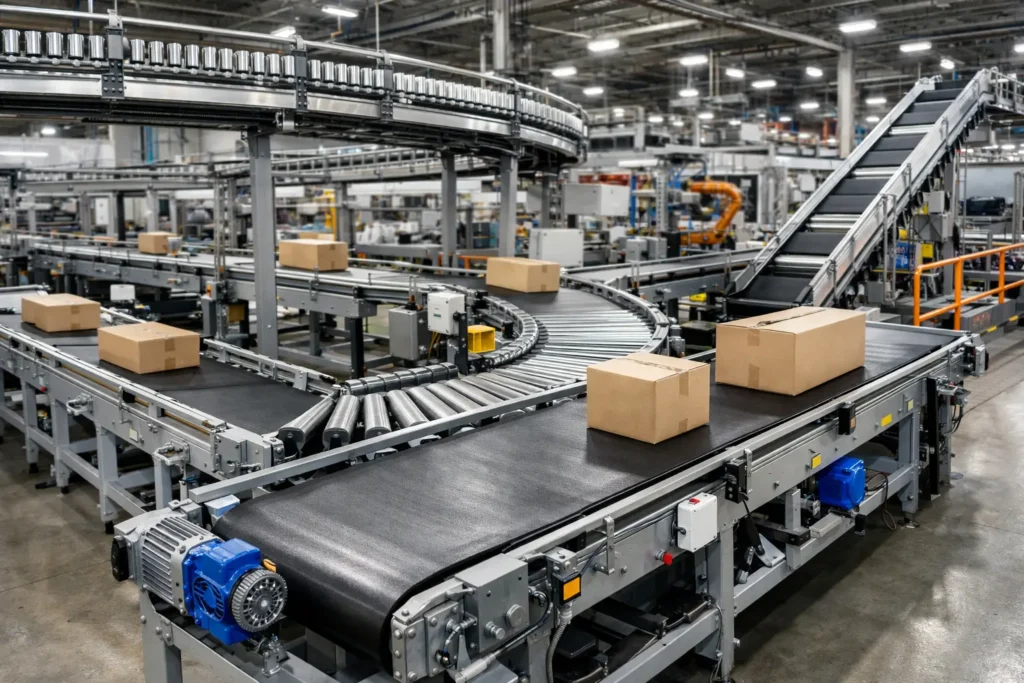
Why Conveyor Systems Are Essential in Industrial Applications
Modern industrial operations rely heavily on conveyors and conveying systems due to their ability to:
- Improve workflow efficiency
- Reduce manual material handling
- Ensure consistent and controlled material flow
- Enhance safety and reduce workplace injuries
- Integrate seamlessly with processing and packaging equipment
Whether in agriculture, mining, manufacturing, or logistics, conveyors form the backbone of efficient material handling.
Common Types of Conveyor Systems
Different applications require different conveyor designs. Below are some of the most widely used conveyors in industrial environments.
1. Belt Conveyors
Belt conveyors are among the most versatile conveying systems, ideal for transporting materials over long distances. They are commonly used in manufacturing, warehousing, and bulk handling operations.
2. Screw Conveyors
Screw conveyors use a rotating helical screw to move materials through a trough or tube. They are particularly effective for handling powders, granules, and semi-solid materials in a controlled and enclosed manner. Screw conveyors are often used for feeding, dosing, and short-distance conveying applications.
3. Drag Chain Conveyors
Drag chain conveyors are designed to move heavy, abrasive, or high-temperature materials. Using chains with attached flights, these conveyors pull material along an enclosed trough, making them ideal for demanding industrial environments that require durability and strength.
4. Integrated Conveying Systems
In many facilities, multiple conveyor types work together as part of a single conveying system, ensuring efficient material flow across different stages of production or processing.
Key Components of a Conveying System
Regardless of the conveyor type, most conveying systems share common components:
- Drive unit and motor
- Conveyor structure or frame
- Material-handling element (belt, screw, chain, or flights)
- Bearings, rollers, or guides
- Safety and control systems
Proper selection and integration of these components are essential for long-term performance and reliability.
Design Considerations for Industrial Conveyor Systems
When planning conveyors and conveying systems, several factors must be evaluated:
- Type and characteristics of material
- Required capacity and throughput
- Distance and direction of conveying
- Environmental conditions (dust, moisture, heat)
- Maintenance and access requirements
Choosing the right system ensures efficient operation while minimising wear, energy consumption, and downtime.
Why Choose Prime-MFG?
Prime-MFG is one of the leading conveyor manufacturers Australia, delivering high-quality, engineered solutions for industrial material handling. With extensive experience in designing and manufacturing conveyors and conveying systems, Prime-MFG supports a wide range of industries with reliable and customised solutions.
From belt and screw conveyors to robust drag chain conveyors, Prime-MFG focuses on durability, precision engineering, and tailored designs that meet specific operational requirements. Their commitment to quality and performance makes them a trusted partner for businesses seeking efficient and long-lasting conveyor solutions.
Final Thoughts
Understanding the basics of conveyors and conveying systems is essential for building efficient, safe, and productive industrial operations. By selecting the right conveyor type—whether it’s screw conveyors, drag chain conveyors, or integrated conveying systems—businesses can optimise material flow and reduce operational challenges.
With expert engineering and proven manufacturing capability, Prime-MFG continues to support Australian industries with conveyor solutions built for performance, reliability, and long-term value.