
In modern industrial and manufacturing environments, efficient material handling is essential for productivity and safety. Among various conveying solutions, belt conveyors stand out as one of the most widely used and versatile systems for transporting materials in a continuous and controlled manner. At Prime MFG, we specialise in high-quality conveying systems, from belt conveyors to bucket elevators, chain conveyors, and even integrated solutions like the bulk bag filling station — helping Australian industries optimise workflow and boost efficiency.
What is a Belt Conveyor?
A belt conveyor is a mechanical material handling system that uses a continuous loop of flexible material (the belt) to transport items or bulk products from one point to another. Driven by pulleys and powered by an electric motor, the belt runs over rollers or a smooth surface, making it ideal for moving materials horizontally, on inclines, or even in curved layouts.
Belt conveyors are highly adaptable, capable of handling a wide range of materials, from delicate packaged goods to heavy bulk materials, and are designed to meet the unique needs of industries such as manufacturing, logistics, food processing, and mining.
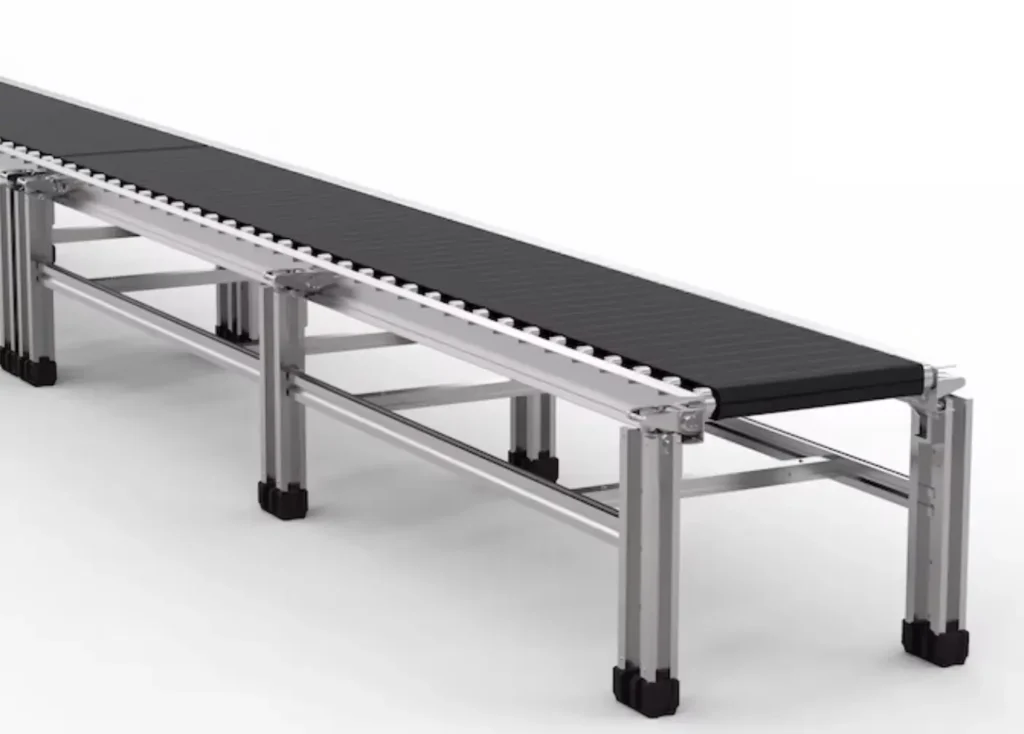
Key Parts of a Belt Conveyor
Understanding the primary components of belt conveyors helps you plan for installation, operation, and maintenance:
1. Conveyor Belt
The most visible part of the system, the belt, is typically made of materials such as PVC, rubber, or steel-cord-reinforced belts. Selection depends on the material being conveyed and environmental needs (e.g., food-grade belts for hygienic operations).
2. Drive Pulley
This pulley is connected to the motor and transmits power to move the belt. Efficient drive systems ensure consistent throughput and energy-saving performance.
3. Idlers and Rollers
These support the belt and reduce friction during operation. Regular inspection of idlers can prevent premature wear or belt misalignment.
4. Frame and Structure
The conveyor’s frame provides rigidity and alignment for smooth material transport — custom-built structures help integrate belt conveyors into complex process lines.
5. Safety Components
Emergency stops, guards, sensors, and speed controls ensure operator safety and help prevent downtime due to unexpected stoppages.
Where Belt Conveyors Are Used
Belt conveyors are a staple in many industries due to their versatility and efficiency:
1. Warehousing & Logistics
Convey cartons, totes, and packages efficiently across distribution centres.
2. Manufacturing
Integrate belt conveyors into assembly lines or with automated equipment.
3. Mining & Bulk Materials
Move ores and aggregates from one processing stage to another.
4. Food & Beverage
Handle products gently with food-grade belts for hygiene compliance.
Belt conveyors often work alongside other conveying systems like bucket elevators for vertical lift applications, chain conveyors for heavy or abrasive materials, or integrated processing stations like a bulk bag filling station to create complete end-to-end material-handling workflows.
Maintenance Tips to Keep Your Belt Conveyor Running Smoothly
Regular maintenance ensures low downtime, safe operation, and prolonged equipment life. Below are essential tips for maintaining belt conveyors:
1. Regular Inspections
Check the belt, rollers, pulleys, and drive units for wear, misalignment, or material buildup. Early detection prevents more costly repairs.
2. Clean Belts Frequently
Remove debris and residue from the belt surface and undercarriage to prevent blockages that lead to uneven wear and inefficiencies.
3. Belt Tracking & Tension
Ensure the belt runs straight and true. Adjust tension and alignment as needed to prevent slippage or excessive wear on edges.
4. Lubricate Moving Parts
Grease rollers, bearings, and other moving components according to manufacturer guidelines to reduce friction and increase longevity.
5. Scheduled Preventative Maintenance
Set up routine checks and servicing intervals, especially for high-usage or heavy-duty belt conveyors, to avoid unscheduled breakdowns.
Belt Conveyors vs. Other Systems
While belt conveyors are a highly versatile solution, they are just one part of a broader material handling ecosystem:
- Bucket Elevators excel at lifting bulk materials vertically with minimal footprint.
- Chain Conveyors are ideal for heavy and abrasive materials where belt systems may not be suitable.
- Bulk Bag Filling Stations integrate with conveyors to streamline packing, weighing, and dispensing operations.
Each system plays a vital role depending on layout, material type, and throughput requirements — and they can be combined for complete solutions tailored to your workflow.
Final Thoughts
Belt conveyors remain a dependable foundation of modern material handling thanks to their simplicity, adaptability, and efficiency. Whether you’re designing a standalone belt conveyor or planning an integrated solution that includes bucket elevators, chain conveyors, or a bulk bag filling station, choosing the right components and maintaining them properly will pay dividends in reliability and performance.
If you’d like to explore custom conveyor systems or need professional advice on the best solution for your operation, Prime MFG is here to help. Contact us today to find out how we can tailor a conveying system to fit your specific needs.