
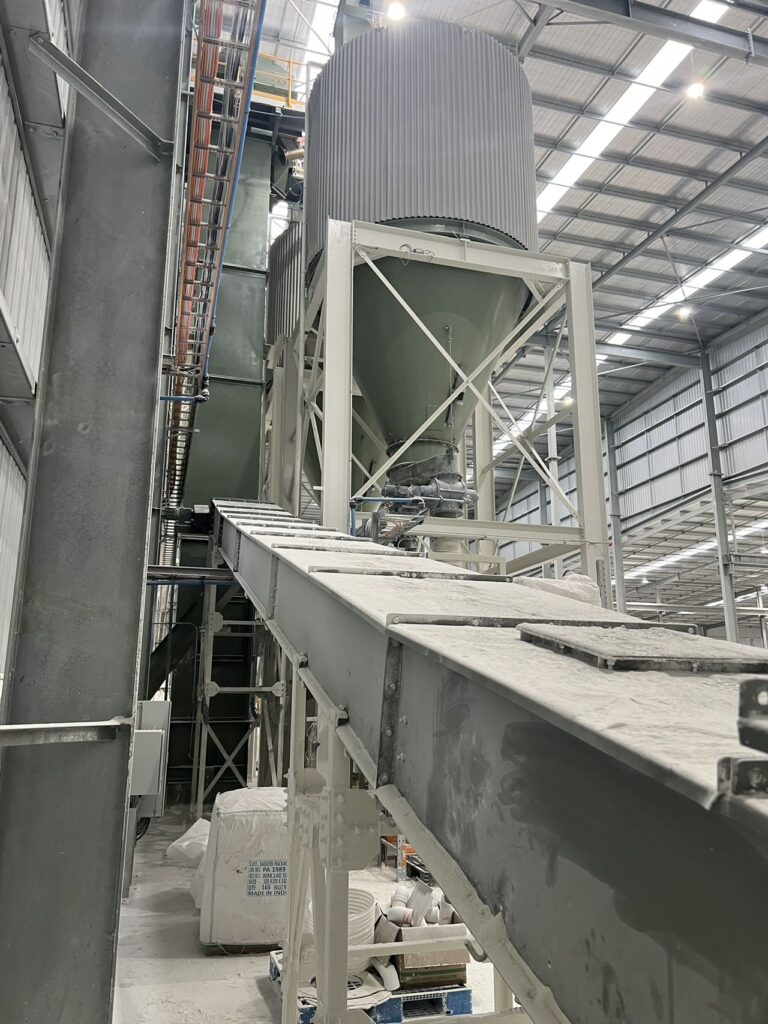
In the relentless machinery of modern industry, from the vast bulk handling operations in the mining sector to the high-speed unit handling demands of e-commerce logistics, efficiency is the ultimate currency. At the core of almost every production, processing, or distribution facility lies the circulatory system of the operation: the conveyor systems. When these critical arteries seize up, the result is not merely an inconvenience; it is a rapid haemorrhage of profit, productivity, and reputation.
A reliable conveyor partner offers far more than just fabrication and installation. They offer system reliability, deep local knowledge of compliance and environmental factors, and an unwavering commitment to post-installation support that spans decades. This comprehensive approach transforms your conveyor infrastructure from a potential liability into a sustained competitive advantage. This guide outlines the essential phases of due diligence required to select a partner who can deliver not just a machine, but long-term reliability across the operational lifecycle.
Phase 1: Assessing Core Competency and Technical Expertise
The foundation of any successful conveyor partnership is the supplier’s technical depth and proven competency. Before engaging, you must clearly define your material-handling challenge and ensure the potential partner has the specific engineering capabilities to address it.
- Understanding Load Types: Unit Handling vs. Bulk Handling
The Australian market presents a unique dichotomy in material transport: - Bulk Handling: This involves moving raw, granular, or heavy materials like iron ore, coal, grain, or cement. These projects require extremely robust belt conveyors, specialised idler rollers, heavy-duty pulleys, and structural engineering capable of handling immense loads and harsh environments (e.g., high dust levels, remote locations). The partner must demonstrate expertise in material flow dynamics and bulk terminal design.
- Unit Handling: This focuses on discrete items such as parcels, totes, cartons, and pallets, predominantly found in warehousing, e-commerce, and food and beverage (F&B) sectors. These applications often rely on roller conveyors, chain conveyors, and sophisticated sortation systems that demand precision, speed, and complex automation integration.
A partner specialising only in warehouse roller conveyors is unlikely to handle a mining bulk materials project, and vice versa. Look for a partner who can clearly articulate their historical success in your specific load and environment.
Specialisation and Industry Experience
A prospective partner’s history within specific end-user industries is a vital indicator of reliability. Expertise translates directly into designs that anticipate specific sector challenges:
- Mining: Experience with extreme wear, corrosion resistance, high throughput requirements, and remote site logistics.
- Food and Beverage (F&B) / Pharmaceutical: Knowledge of hygienic design, wash-down procedures, stainless steel fabrication, and stringent contamination control (CIP/SIP standards).
- Logistics / E-commerce: Proficiency in high-speed sortation, zero-pressure accumulation, and complex integration with Warehouse Management Systems (WMS).
- Manufacturing: Ability to integrate into tight production lines, provide heavy-duty pallet handling, and implement buffering or accumulation solutions.
Request case studies and references from companies operating in your exact vertical. A partner who understands your industry speaks the language of your challenges, moving beyond simple product supply to true material handling solutions.
Phase 2: Evaluating System Reliability and Component Quality
Reliability is not a feature; it is the total of every component and design decision. The longevity of any conveyors and conveying systems hinges on the quality and robustness of their foundational elements. This is where cost-cutting reveals itself as a future expense.
The Heart of the System: Drive Systems and Pulleys
The drive unit is the most critical active component. A reliable partner will source or manufacture drive systems, including motors, gearboxes, and drive pulleys, that are oversized for the task, providing a margin of safety against unexpected surges or increased throughput demands.
Key checks include:
- Power Efficiency: Are the motors high-efficiency (IE3 or IE4 rated)? While more expensive initially, they dramatically reduce long-term operational costs, which is a major factor in Australian industrial utility prices.
- Accessibility: Is the drive position designed for easy access? Complex, time-consuming access to perform basic maintenance (like oil changes or belt tension checks) leads to deferred maintenance, which inevitably causes premature failure.
- Lagging: For belt conveyors, assess the quality and type of lagging (rubber coating) on the drive pulley. High-quality, ceramic or rubber lagging ensures maximum friction, reduces belt slip, and minimises wear, especially in wet or dirty environments.
Phase 3: Embracing Modernity: Technology and Future-Proofing
The conveyor systems of today are no longer purely mechanical; they are highly integrated, data-driven units essential to the smart factory or warehouse. A reliable partner must demonstrate fluency in integrating modern technology to future-proof your investment.
The Rise of Automated Conveyor Systems
In logistics and manufacturing, automation is key to managing volume and reducing human error. Automated Conveyor Systems go beyond simple transportation. They include:
- Sortation: Systems that rapidly divert items based on digital instructions (e.g., pushers, activated roller shoes, cross-belt sorters).
- Accumulation: Zero-pressure accumulation (ZPA) systems that use sensors and independent drive zones (Motorised Drive Rollers or MDR) to prevent items from touching, thus protecting delicate products while maximising density on the line.
- Robotic Interface: Designing conveyor systems with precision staging areas, known as “golden stations,” that allow for seamless handoff between the conveyor and other automated assets, such as Automated Guided Vehicles (AGVs) or collaborative robots (Cobots).
The partner must prove not just that they can build the physical equipment, but that they can write the complex Programmable Logic Controller (PLC) code necessary to integrate the conveying systems with your existing operational technology (OT) infrastructure.
Phase 4: The Crucial Post-Installation Lifecycle Support
A reliable conveyor systems partner does not disappear once the commissioning is complete. In fact, the maintenance and support phase is where the true value of the partnership is realised. This long-term commitment is paramount for maintaining long-term reliability.
Comprehensive Conveyor System Maintenance Programs
A robust partner offers a tiered Conveyor System Maintenance program that aligns with the asset’s criticality. These programs move far beyond simple reactive repairs:
- Preventive Maintenance (PM): Scheduled inspections, lubrication, component adjustments (e.g., belt tracking and tensioning), and component replacements based on operating hours or throughput volume. This systematic approach tackles wear and tear before it results in failure.
- Condition-Based Monitoring (CBM): Using data collected from smart sensors (as detailed in Phase 3) to trigger maintenance actions only when necessary. For instance, replacing a bearing when its vibration signature crosses a predefined threshold, rather than on a fixed calendar schedule.
- Audits and Optimisation: Regular, detailed audits conducted by specialised conveyor engineers to identify bottlenecks, suggest control system improvements, and propose upgrades (e.g., belt cleaner technologies or dust suppression) to enhance both efficiency and compliance.
Crucially, the maintenance partner should have the necessary Australian certifications and expertise to service high-risk areas like confined spaces, electrical systems, and elevated working platforms.
Phase 5: Financial Stability and Long-Term Partnership Metrics
The longevity of your conveyor systems is intrinsically linked to the longevity and stability of your partner. A financially secure partner is one who will be able to honour decade-long warranties, invest in new technology, and maintain a high standard of service personnel.
Analysing Total Cost of Ownership (TCO) vs. Initial CAPEX
Reliable procurement decisions look beyond the initial price tag. The choice should be driven by the Total Cost of Ownership (TCO) over a 15-to-20-year lifespan. A partner who quotes a slightly higher initial CAPEX may deliver a lower TCO through:
- Reduced Energy Costs: Through the use of energy-efficient components (VFDs, low-friction belts).
- Lower Maintenance Costs: Due to superior component quality, accessibility in design, and fewer failures.
- Maximised Uptime: The value gained from avoiding unplanned downtime events often dwarfs the initial investment difference.
The partner should be willing to engage in a detailed TCO analysis during the tendering phase, quantifying the expected savings derived from their superior design and component choices versus a cheaper, lower-quality competitor.
Your Partner in Reliability: Prime MFG’s Commitment
Throughout this comprehensive guide, we have established the essential criteria for securing a truly reliable conveyor partner. At Prime MFG, these criteria are not aspirational goals; they are the foundation of our operation.
We are not just a supplier; we are an integrated engineering solution built for the industry:
- Bulk Handling Specialisation: Our core competency lies in the rigorous demands of bulk material handling. We manufacture and supply heavy-duty Belt Conveyors, Screw Conveyors, Drag Conveyors, and Bucket Elevators, focusing on industries like agriculture, mining, and food processing, where uptime is non-negotiable.
- Uncompromising Component Quality: We eliminate the risks of unverified imports. We manufacture and supply critical components, including durable idler rollers, high-quality pulleys (with custom lagging), and specialised wear parts using Engineering Plastics (UHMWPE/HDPE). This direct control over the supply chain ensures every component meets our stringent quality benchmarks.
- Local Stock and Rapid Response: We understand that time is money in Australia. Our significant local stockholding, particularly at our Melbourne facility, ensures that high-wear and critical spares from idler rollers to replacement flights are readily available, dramatically minimising breakdown lead times and supporting your Conveyor System Maintenance programs immediately.
- Engineered for Australian Conditions: With decades of combined industry experience, our in-house engineering team designs systems for optimal TCO. We are experts in providing custom design for challenging brownfield sites, ensuring full compliance with Australian OH&S standards, and integrating high-efficiency automation and control systems to deliver reliable, energy-saving performance.
- End-to-End Partnership: We offer consultation from concept design through to commissioning and beyond, including integrated automated packaging systems and long-term technical support. Our goal is to be the single, reliable source for all your conveyors and conveying systems needs.
Choosing Prime MFG means investing in a local partner whose reliability is built into the product, the service, and the inventory. We meet every criterion for long-term operational success.
Conclusion: Investing in Reliability for Operations
The decision of how to choose the right conveyor partner for long-term reliability is a strategic business choice, not a mere procurement exercise. In an environment defined by high operational costs, stringent safety standards, and increasing demands for automation and sustainability, your conveyor infrastructure is a crucial driver of competitive advantage.
By rigorously evaluating potential partners across these phases, from confirming their expertise in unit handling or bulk material handling and their commitment to component quality (like reliable idler rollers and pulleys), to assessing their ability to implement sophisticated Predictive Maintenance and uphold strict Australian OH&S compliance, you are investing in more than just equipment. You are securing a long-term relationship built on engineering excellence, local support, and a shared dedication to maximising the uptime of your conveyors and conveying systems. The result is a reduced TCO, maximised operational efficiency, and a resilient production platform capable of sustaining growth for decades.
Contact Prime MFG today to discuss your next project and experience the confidence that comes with high-quality, locally supported bulk material handling solutions.